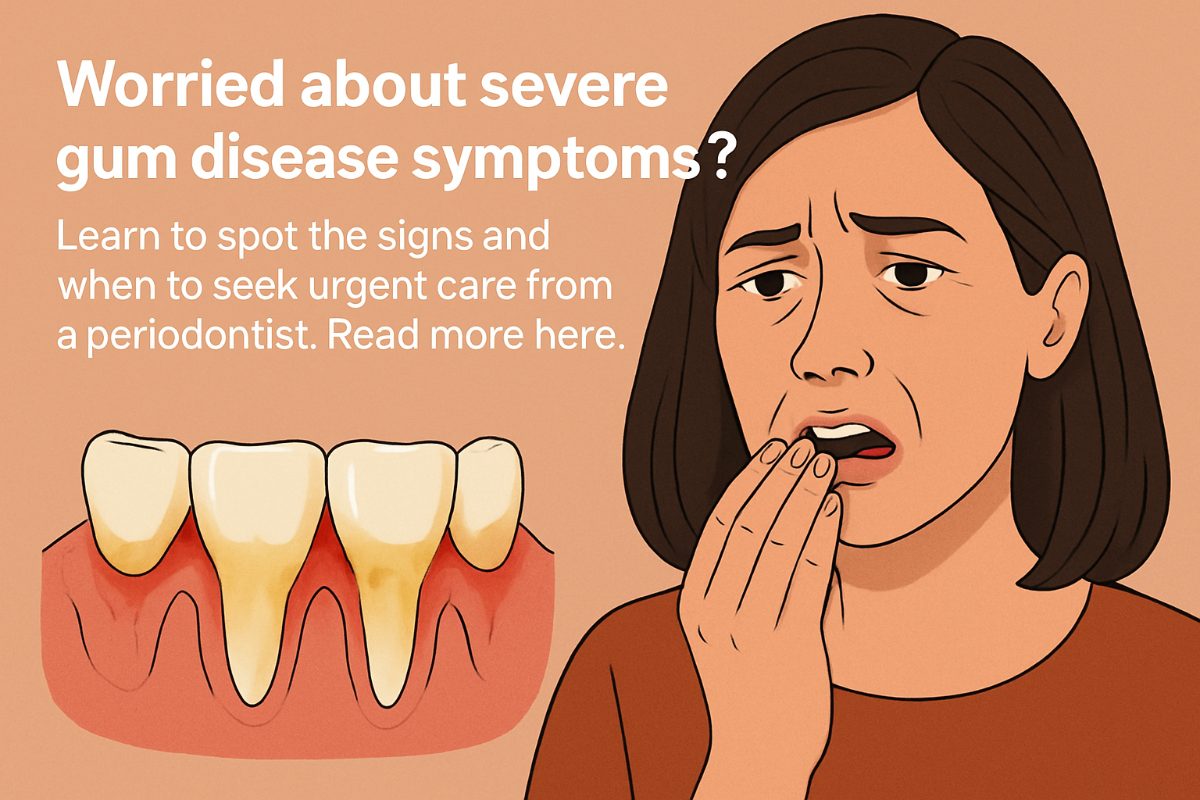
Spotting severe gum disease symptoms in Berkeley early can protect your teeth, your jawbone, and your overall health. This post explains the signs to watch for, why they matter, when to seek urgent care, and what a Berkeley periodontist will do to diagnose and treat advanced gum disease. If you notice any severe signs, prompt attention is important.
Common Severe Gum Disease Symptoms To Watch For
Below are symptoms that go beyond routine gum irritation. These severe gum disease symptoms often mean the disease has moved past mild gingivitis and needs specialist care.
Heavy Or Persistent Gum Bleeding
Bleeding that happens every time you brush or floss, or bleeding that is heavy or prolonged, is a warning sign. Occasional light bleeding after an aggressive scrub is different from bleeding that won’t stop or returns after gentle care.
Receding Gums Or Teeth That Look Longer
If your teeth appear longer or you can see the tooth root, gum tissue has pulled away. This recession suggests tissue loss and exposes roots to decay and sensitivity.
Loose, Shifting, Or Separating Teeth
Teeth that feel mobile, are moving out of place, or that create new gaps often mean the supporting bone is being lost. Mobility is a common sign of advanced periodontitis.
Chronic Bad Breath Or A Constant Bad Taste
Persistent bad breath or a foul taste that doesn’t go away with brushing points to pockets of bacteria and infection beneath the gum line rather than simple surface plaque.
Swelling, Pus, Or Painful Gums
Red, swollen gums that hurt or drain pus are signs of active infection or an abscess. These symptoms raise the risk the infection could spread and need prompt care.
Changes In Bite Or Denture Fit
When bone and tissue change, your bite can feel different and dentures may no longer fit. Any sudden change in how your teeth meet is a sign to have a specialist evaluate you.
Why These Severe Gum Disease Symptoms Are Serious
Gum disease can progress from reversible gingivitis to periodontitis, where pockets form and bone is lost. Left untreated, this can lead to loose teeth and tooth loss. Research also links advanced gum disease to higher risks for heart disease, diabetes complications, and other systemic issues, so treating severe gum disease symptoms is about more than your mouth.
When To See A Berkeley Periodontist For Severe Gum Disease Symptoms
Seek urgent care if you have pus, severe pain, a suddenly loose tooth, or symptoms that get rapidly worse. For most severe signs, you should contact a Berkeley periodontist within days to one week. If you have fever, spreading swelling, or trouble breathing, seek emergency care immediately.
What To Expect At Your Periodontist Visit
Your visit will include a full dental and medical history review and focused diagnostics to pinpoint the problem and cause. Typical tests include periodontal charting, digital X-rays or 3D imaging, and sometimes Oral DNA testing to identify specific bacteria.
Treatment Options A Periodontist May Recommend
- Nonsurgical deep cleanings (scaling and root planing): Removes bacteria and smooths roots to help gums reattach.
- LANAP® laser therapy: Laser treatment that targets infected tissue with minimal cutting.
- Guided tissue regeneration: Uses membranes and biologics to encourage bone and tissue regrowth.
- Pinhole Surgical Technique® (PST): Minimally invasive fix for gum recession without grafts or sutures.
- Bone grafting: Restores lost bone to stabilize teeth or prepare for implants.
- Dental implants: Permanent tooth replacement when teeth cannot be saved.
- Sedation options: Oral or IV sedation to keep you comfortable during complex care.
How To Reduce Risk And Support Treatment
Good home care supports professional treatment. Brush twice daily with a soft brush, floss or use interdental cleaners daily, and quit tobacco. Keep regular periodontal maintenance visits and follow post-procedure instructions closely to lower the chance of recurrence.
About Dr. Keith Chertok, DDS And Our Berkeley Periodontal Care
Dr. Keith Chertok, DDS, is a board-certified periodontist trained at UCSF and NYU with years of teaching and clinical experience. He specializes in evidence-based, minimally invasive options—like LANAP® and the Pinhole Surgical Technique®—and uses digital 3D planning, Oral DNA testing, and sedation when appropriate to improve outcomes and comfort.
If you notice any severe gum disease symptoms in Berkeley, schedule an evaluation as soon as possible. Bring a list of medications, your medical and dental history, and any dental insurance information. Photos of your mouth or notes on how long symptoms have been present can help. Contact our Berkeley office to book an appointment and get personalized care to protect your smile and health.