
Understanding dental implants can help you decide if they are the right long-term solution for missing teeth. This post explains what dental implants are, how they work, who is a good candidate, treatment options, the typical process, costs and risks, and how to choose a specialist for dental implants in Berkeley, CA.
Read on for clear, practical information and a short checklist to help you take the next step toward replacing missing teeth with confidence.
What Are Dental Implants And How Do They Work?
Dental implants are a permanent way to replace missing teeth. They act like a natural tooth by anchoring a replacement tooth to the jawbone. Implants restore chewing, speech, and the appearance of your smile more reliably than many other options.
Parts Of An Implant
Most implants have three basic parts:
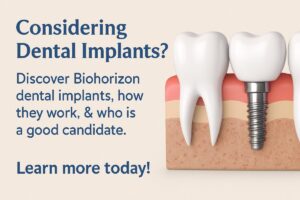
- Implant (root): A titanium or ceramic post placed in the jaw to act like a tooth root.
- Abutment: A connector attached to the implant that supports the visible tooth.
- Crown: The custom-made tooth that fits on the abutment and looks like a natural tooth.
Why Implants Integrate With Bone
Implants bond to bone through a process called osseointegration. The jawbone grows around the implant, creating a stable, long-lasting foundation. This integration preserves bone and prevents the facial shrinkage that often follows tooth loss.
Benefits And Who Is A Good Candidate For Dental Implants In Berkeley, CA
Dental implants in Berkeley, CA offer durable, natural-looking tooth replacement. They improve chewing, protect bone, and can last decades with proper care.
Main Benefits
- Restored chewing function and comfort
- Bone preservation and facial support
- Long lifespan compared with bridges or dentures
- A natural look and feel that boosts confidence
Candidate Checklist
Good candidates for dental implants in Berkeley, CA generally meet these criteria:
- Healthy gums and controlled oral inflammation
- Adequate jawbone or willingness to receive grafting
- Controlled medical conditions (diabetes, heart issues) and approval from your physician if needed
- Non-smoker or willing to quit during healing
- Realistic expectations about time, healing, and maintenance
When Gum Disease Affects Candidacy
Active gum disease can cause implant failure. Periodontal treatment to control infection and restore healthy tissue is often required before placing implants. Treating gum disease first improves long-term success for dental implants in Berkeley, CA.
Types Of Dental Implants And Treatment Options
Treatment choices depend on how many teeth are missing and your jawbone condition.
- Single-Tooth Implant: Replaces one missing tooth without affecting neighbors.
- Implant-Supported Bridge: Replaces several teeth using fewer implants.
- Implant-Retained Denture / All-On-4: Secures a full arch of teeth to a few implants for a stable denture option.
Options also include immediate placement after extraction or delayed placement after healing. Materials vary (titanium or ceramic), and advanced care may use guided 3D planning, bone grafting, or sinus lifts when needed to create a strong foundation.
The Dental Implant Process: What To Expect
Consultation And Planning
The process starts with an exam, medical history, and 3D imaging. Oral DNA testing or other diagnostics may guide periodontal health plans. A personalized plan shows the number of implants, grafting needs, timeline, and sedation options. For dental implants in Berkeley, CA, thorough planning reduces surprises and speeds recovery.
Surgery And Healing
Implant placement is often done with local anesthesia and optional sedation. The implant is placed into the jawbone, and healing begins. Osseointegration can take several months. Some patients receive a temporary tooth during healing so function and appearance are maintained.
Restoration And Follow-Up
After healing, the abutment and final crown or prosthesis are attached. Regular maintenance visits and a periodontal maintenance schedule keep implants healthy. Daily home care and professional cleanings are essential to protect your investment.
Costs, Risks, And Alternatives
What Impacts Cost
Costs vary based on number of implants, need for bone grafting or sinus lifts, implant materials, imaging and guided planning, and sedation choices. Complex cases and full-arch restorations typically cost more than single-tooth replacements.
Common Risks And How Specialists Reduce Them
Risks include infection, implant failure, and nerve or sinus complications. Careful planning with 3D imaging, precise surgical technique, and periodontal management reduce these risks. Specialists follow protocols to improve predictability and safety.
Alternatives To Dental Implants
Alternatives include fixed bridges, removable partials, and conventional dentures. Bridges are less invasive up front but may affect adjacent teeth. Dentures cost less initially but can move and cause bone loss. Your clinician can help weigh pros and cons based on your goals and budget.
Choosing A Specialist For Dental Implants In Berkeley, CA
For complex cases, a board-certified periodontist matters. A specialist brings advanced training in bone grafting, soft tissue management, and implant surgery.
Dr. Keith Chertok, DDS, is a board-certified periodontist in Berkeley, CA, with advanced training in implantology and minimally invasive gum care. His practice offers LANAP® laser therapy, the Pinhole Surgical Technique®, 3D planning, piezosurgery, oral DNA testing, and sedation options to support safer, more comfortable implant care.
How To Decide And Next Steps
Quick checklist before you schedule a consultation for dental implants in Berkeley, CA:
- Identify how many teeth you need to replace and your goals (function, appearance).
- Gather medical history and list of current medications.
- Confirm you are willing to follow a treatment timeline and maintenance visits.
- Choose a specialist with 3D planning and periodontal expertise for complex cases.
Ready to learn more? Schedule a consultation to discuss whether dental implants in Berkeley, CA are right for you and get a personalized plan.