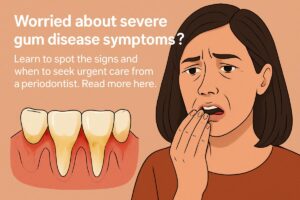

How does a periodontist treat gum disease? Periodontal disease (gum disease) is an infection of the gums and supporting bone that can lead to tooth loss and impact overall health. Specialist care matters when pockets, bone loss, or recurring infections are present. In this article you’ll learn how a periodontist diagnoses gum disease, the common non-surgical and surgical treatments, recovery expectations, and practical next steps for a consultation.
How does a periodontist treat gum disease: initial diagnosis
Comprehensive clinical exam
A periodontist starts with a full exam. That includes measuring pocket depths, checking for bleeding, testing tooth mobility, and evaluating soft tissue health. These measurements show how far the disease has progressed and guide treatment choices.
Imaging and advanced tests
Advanced diagnostics help pinpoint problems. Digital X-rays and 3D imaging reveal bone loss and hidden defects. Oral DNA testing can identify specific bacteria driving infection. If you’re asking how does a periodontist treat gum disease in Berkeley, CA, expect these targeted tests as part of the plan.
Non-surgical treatments periodontists commonly use
Scaling and root planing (deep cleaning)
Scaling and root planing removes plaque and tartar below the gum line and smooths root surfaces to help gums reattach. This deep cleaning is often the first step and can stop disease progression for many patients.
Adjunctive antimicrobial therapy
To control bacteria, a periodontist may use local antibiotics or medicated chips placed in pockets, and sometimes systemic antibiotics. These are used alongside cleaning to reduce infection and speed healing.
Laser therapy (LANAP®)
LANAP® is an FDA-cleared laser protocol that targets infected tissue without large incisions or sutures. It helps kill bacteria, preserves healthy tissue, and can promote bone and connective tissue regeneration with less discomfort and faster recovery.
Surgical and regenerative approaches
Pocket reduction and flap surgery
Surgery is recommended when pockets are too deep for non-surgical care. Flap surgery gives the specialist access to thoroughly clean roots and reshape tissue to reduce future pocketing.
Guided tissue regeneration and bone grafting
When bone or attachment is lost, guided tissue regeneration (GTR) and bone grafts rebuild support around teeth. Membranes and graft materials encourage the body to regrow bone and connective tissue.
Piezosurgery for precise bone work
Piezosurgery uses ultrasonic instruments for controlled bone shaping during grafting or implant preparation. It protects soft tissue and improves accuracy in complex cases.
Soft tissue procedures for recession and esthetics
Pinhole Surgical Technique (PST) and grafting
PST is a minimally invasive, suture-free option to correct gum recession. Traditional connective tissue grafts remain a reliable choice when more tissue is needed to cover exposed roots.
When soft tissue treatment improves long-term outcomes
Restoring gum tissue reduces root sensitivity, protects roots from decay, and improves the long-term health and appearance of the smile.
Replacing teeth affected by advanced periodontal disease
Dental implants and planning
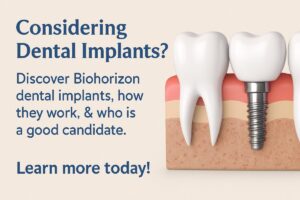
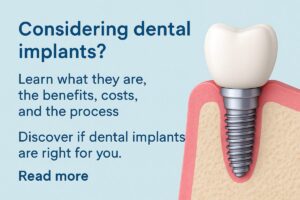
When teeth cannot be saved, implants are a predictable replacement after periodontal disease is stabilized. Digital 3D planning helps place implants precisely and assess when grafting is needed first.
Maintenance for implant success
Implants need regular monitoring to prevent peri-implantitis. Periodontal maintenance visits, good home care, and periodic imaging keep implants healthy long-term.
Recovery, maintenance, and prevention
What to expect after treatment
After treatment you may have mild swelling or discomfort for a few days. Pain control, soft foods, and short activity limits are common. Healing timelines vary by procedure—deep cleanings heal quickly, surgeries and grafts take longer.
Long-term periodontal maintenance
Once treated, patients enter a maintenance program with more frequent cleanings (often every 3–4 months), targeted home care, and periodic reassessments to prevent recurrence.
How to choose a periodontist and questions to ask
Look for board certification or advanced periodontal training, experience with LANAP®, PST, piezosurgery, oral DNA testing, and 3D planning. Ask about success rates, alternatives, expected timeline, sedation options, and how they personalize care. If you want to know how does a periodontist treat gum disease specifically for your case, bring recent X-rays or dental records to the consult.
About Dr. Keith Chertok, DDS and the practice
Dr. Keith Chertok, DDS is a board-certified periodontist based in Berkeley, CA, with advanced training from UCSF and a long record of teaching and clinical excellence. His practice offers LANAP®, Pinhole Surgical Technique®, piezosurgery, oral DNA testing, guided tissue regeneration, and digital 3D planning. Dr. Chertok focuses on minimally invasive, evidence-based solutions that prioritize patient comfort and lasting results.
To prepare for a consultation, gather recent dental records, X-rays, a list of medications, and notes about symptoms. Expect a focused exam, imaging, and a clear treatment plan with timelines and costs. If you’re wondering how does a periodontist treat gum disease in Berkeley, CA and want an evaluation, call to schedule an exam with the practice and bring any prior records to speed up diagnosis and treatment planning.